
The Future is Unwritten
November is Coming
If you want to see how someone wants to be perceived, read their dating profile.
If you want to understand who they really are, look at how they direct their money and time.
Interestingly, other entities aren’t much different. A corporation wants to portray itself as being a wonderful societal partner, creating jobs in the community, minimizing their environmental and carbon footprint, “bringing good things to life”.
If you want to understand who they really are, look at how they direct their money and time.
A nation might want to portray itself as strong yet benevolent. Diplomacy and global cooperation, but a strong and unwavering defense to preclude conflict and military aggression by others.
One more time, with feeling …
If you want to understand who they really are, look at how they direct their money and time.
Forget about the campaign speeches. The broken promises. The lies. Who we are as a country is described in detail in every line item of our national budget. Every taxpayer dollar that is appropriated is a choice between competing visions of America
This is not about liberal tears or MAGA tears. This is not about the red team versus the blue team. The challenges ahead don’t care who you voted for, or why you didn’t vote. The challenges ahead are not political. They are scientific, cultural, economic, and behavioral. If we fail to understand them, plan for them, and confront them we will fail every generation of the past and every generation of the future.
Once people can see beyond the manufactured fear, hatred, and propaganda designed to divide us, the “fierce urgency of now” becomes impossible to ignore.
The Future is Being Written Now
The Trump administration has asked Congress for $1.5 trillion in defense spending for fiscal 2027. This is the largest single increase in “defense” spending in modern U.S. history. The Pentagon would account for nearly half of all federal discretionary spending. The plan adds $5.8 trillion to the national debt over the next decade, just from this one ask.
Imagine running a household budget like this. Earning $4,000 per month and spending $2,000 every month on guns and ammo.
That is not the only ask. There is also a $200 billion emergency supplemental for the war with Iran on top of it.

To partially pay for this massive increase, the administration proposed $73 billion in domestic cuts. The cuts devastate public health research, K-12 public and higher education, renewable energy and climate grants, the federal program that helps families afford heat and electricity, and the federal program that funds local housing repair, water systems, and community projects.
Then there is the Trump Ballroom.

The Trump ballroom project began as a $200 million renovation. It is now $400 million and counting. Senate Republicans recently slipped $1 billion in additional security spending for the project into an immigration bill. Trump’s 2027 budget includes another $174 million for further White House renovations on top of all that. The annual line item for White House repairs has gone from $39 million to $377 million. And critics warn that proposals for a future “Arc de Trump” style vanity project in Washington D.C. would likely require enormous taxpayer funding, major security infrastructure, years of disruption, and the transformation of public space into a symbol of self-promotion.

The corporate “donors” funding the ballroom include Meta, Apple, Google, Amazon, the Adelson Family Foundation, Blackstone CEO Stephen Schwarzman, and the Winklevoss twins. Trump promised “no charge to the taxpayer whatsoever.” Yet another broken Trump promise.

The GOP approved the “Big Beautiful Bill,” adding $3.4 trillion to the national debt over a decade per the Congressional Budget Office (CBO), or $4.1 trillion once interest payments on the debt are counted. It cuts $1.1 trillion from Medicaid and SNAP. It will leave 10 to 16 million Americans without health insurance by 2034.
Taxes for the wealthiest Americans are slashed while healthcare is stripped from working families. Military spending now exceeds the next ten countries combined while public schools and climate investment are gutted.
Competing Budget Visions

An Eisenhower-style conservative vision of America would likely imagine a nation grounded in constitutional stability, broad middle-class prosperity, and pragmatic public investment. Markets would remain the engine of growth, but concentrated corporate power and reckless speculation would be restrained in the interest of long-term strength. Infrastructure, scientific research, education, and defense would be viewed as legitimate public responsibilities essential to preserving both economic competitiveness and democratic resilience. The ideal future would be one of disciplined stewardship: balanced budgets where possible, strong alliances abroad, functional institutions at home, and an understanding that democracy survives only when ordinary citizens believe the system still works for them.
A future imagined through the lens of a Henry A. Wallace or John F. Kennedy liberalism would emphasize the unfinished promise of democracy itself: that political equality is impossible without economic dignity, educational opportunity, and meaningful participation in public life. Government would serve not merely as regulator, but as a democratic counterweight to concentrated private power and a catalyst for human advancement. Scientific innovation, civil rights, labor rights, environmental stewardship, and public purpose would be tied together as part of a larger national project aimed at expanding freedom rather than merely preserving order. The central belief would be that a healthy democracy requires an informed, economically secure, and actively engaged citizenry, and that the wealth and productive capacity of the nation should ultimately strengthen the many rather than accumulate endlessly for the few.
The current administration is not representative of conservative or liberal governance. It is not constructing a pragmatic conservative or liberal future. The Trump/Vance administration represents concentrated wealth, corruption, and mismanagement on a massive scale.

The Betrayal of Global Commitments
USAID
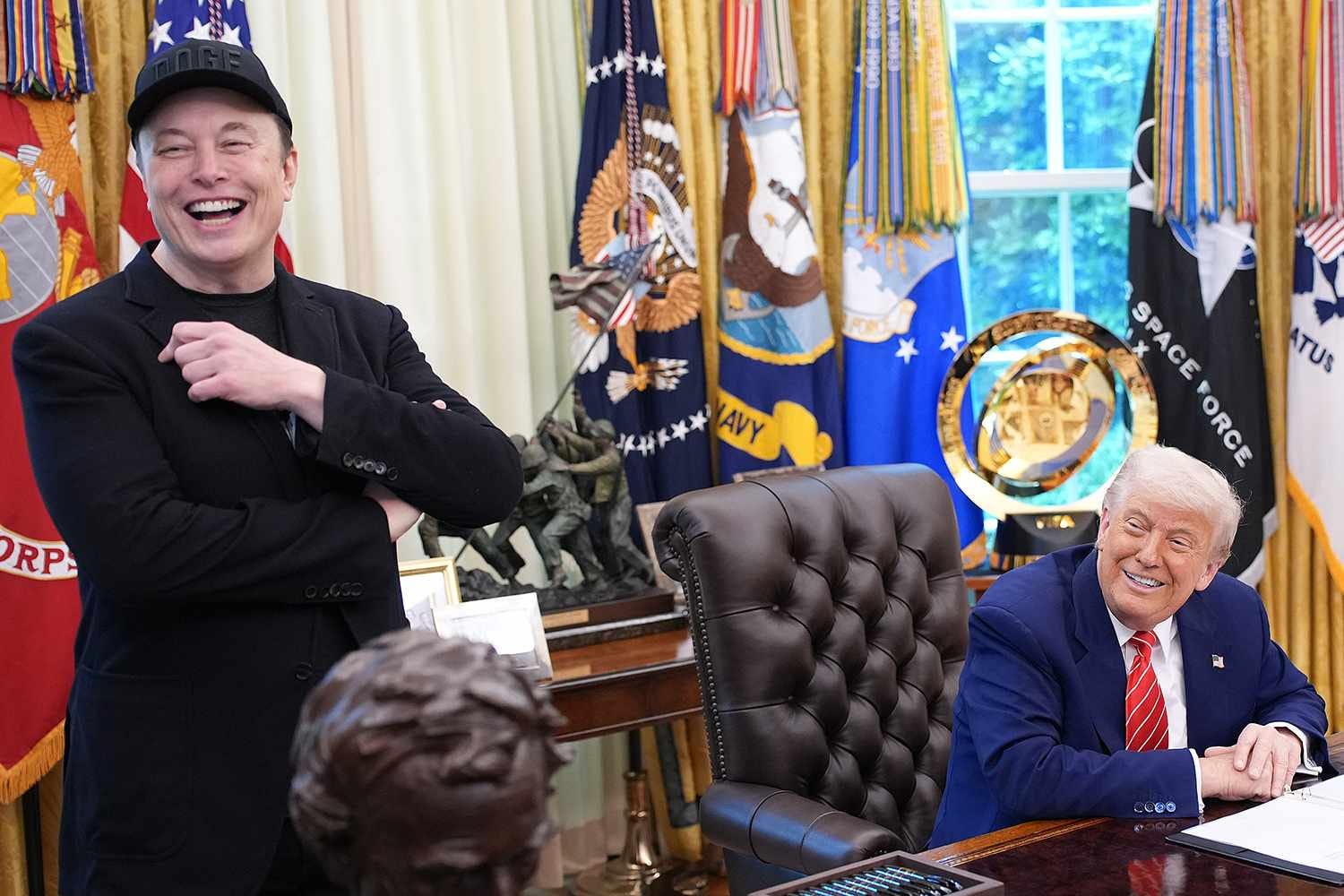
USAID was effectively shut down on July 1, 2025. 83 percent of its programs canceled. 94 percent of its staff laid off. The agency that had delivered humanitarian assistance to roughly 130 countries was dismantled in six months by Elon Musk and Marco Rubio, before Musk left the administration.
A study published just before the shutdown found that USAID had helped save more than 90 million lives over the past two decades. The Lancet projects that the cuts could result in 14 million preventable deaths by 2030, 4.5 million of those among children under five.
The cost of all that humanitarian work? USAID’s annual budget was about $63 billion, under one percent of the federal budget. Roughly $105 per American citizen per year. For that price, we delivered HIV medications in Uganda, cholera response in Congo, malnutrition relief in Sudan, vaccine programs that prevented diseases from reaching American shores, and the soft power that made America an actor people wanted to work with rather than work around.
USAID’s annual budget was about $63 billion, under one percent of the federal budget.
We are now spending $400 million on a ballroom while letting children die of cholera, tuberculosis, and malaria because the medications they were depending on stopped arriving. Two-thirds of Americans, including nearly half of Republicans, oppose the cuts. The administration did it anyway.
The lesson is simple. Diplomacy and humanitarian assistance are massively cheaper than conflict and war. They are also, on the evidence, more effective at producing outcomes that serve American interests. Stable countries do not produce refugee crises. Healthy populations do not become breeding grounds for the next pandemic. People who have benefited from American partnership tend not to align with America’s adversaries.
We just spent at least $200 billion on the war with Iran. That is more than three years of USAID’s entire budget, spent in months. The choice between $63 billion a year saving lives and $200 billion in months of cruise missiles is not a hard choice if your goal is American security. It is only a hard choice if your goal is self-enrichment of family and friends.
People in Cages: Expanding the Prison Industrial Complex
While the funding for diplomacy and humanitarian assistance was being eliminated, the budget for the denial of Constitutional rights, unlawful detention, and mass deportation was exploding.
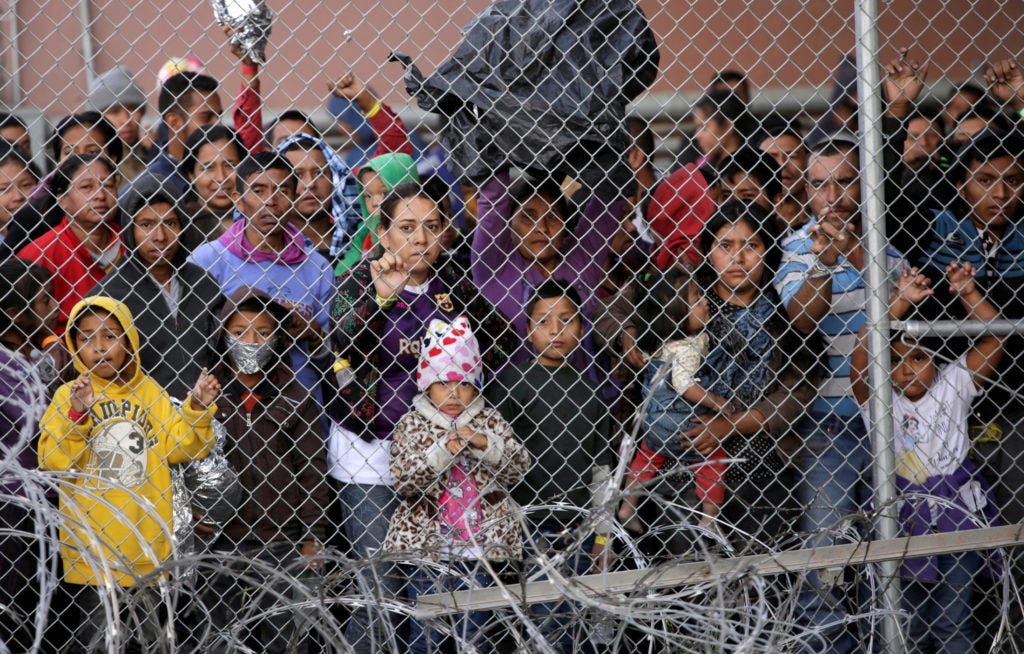
The Trump/GOP’s Big Beautiful Bill provided ICE with $75 billion through 2029, fully funded for four years. The breakdown is staggering:
$45 billion for new detention centers, a 400 percent annual increase. $30 billion for enforcement and deportation operations, a 300 percent increase, funding 10,000 new ICE officers. $46.6 billion for border wall construction, three times what was spent in Trump’s first term. $3.5 billion to reimburse state and local governments for immigration enforcement. $10 billion in a DHS slush fund with minimal guardrails.

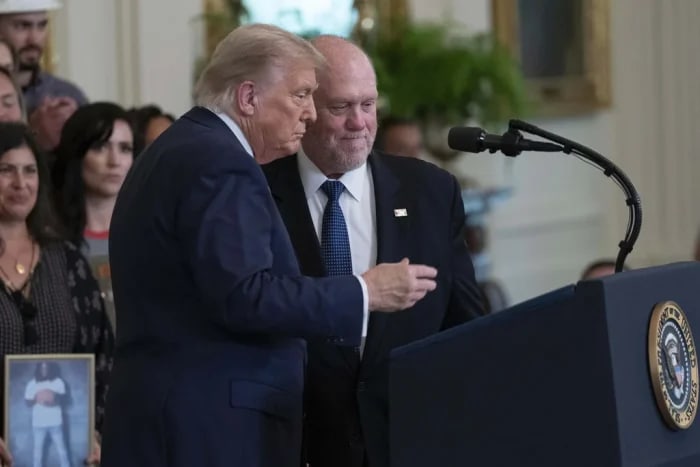
ICE is now the largest federal law enforcement agency in the United States. Its detention budget alone exceeds the entire federal prison system’s budget, despite the federal prison system holding 155,000 people for actual crimes.
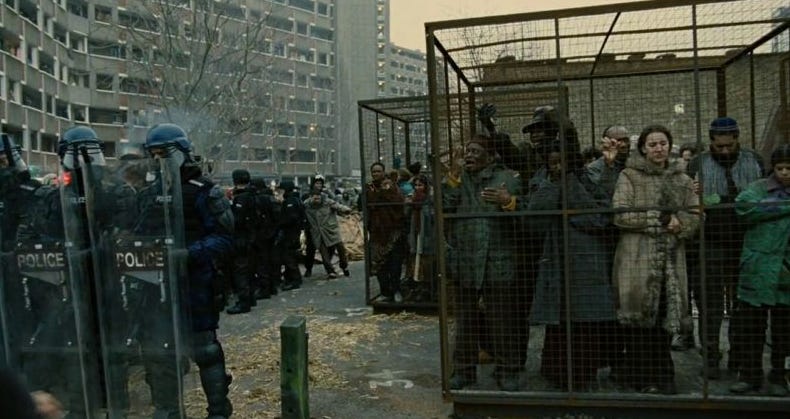
The detention strategy is no longer about temporary holding pending hearings. It is about permanent capacity to incarcerate. ICE has committed $38.3 billion to 24 retrofitted warehouses, including 8 “mega detention centers” capable of holding up to 10,000 people each. ICE has already paid $129 million for a million-square-foot warehouse in Social Circle, Georgia, $100 million for a warehouse in Hagerstown, Maryland, and over $70 million for a site in Surprise, Arizona. Daily detention has grown from 40,000 when Trump took office to over 70,000 today, with capacity being built for 100,000 to 135,000 by late 2026.

These are warehouses. Buildings designed to store retail inventory, now being used to store people.
ICE acting director Todd Lyons described the operating philosophy at an April 2025 conference: “We need to get better at treating deportation like a business... like Amazon Prime, but with human beings.”
The conditions inside are well documented. 2025 was the deadliest year for ICE detention in decades. Six people died in custody in December 2025 alone. Deaths in 2026 are tracking at roughly three times the rate of the prior four years combined. Children have been detained for months in facilities without safe drinking water, medical care, education, or access to lawyers. Hundreds of children have been separated from their parents and caregivers in militarized enforcement operations conducted by masked agents.
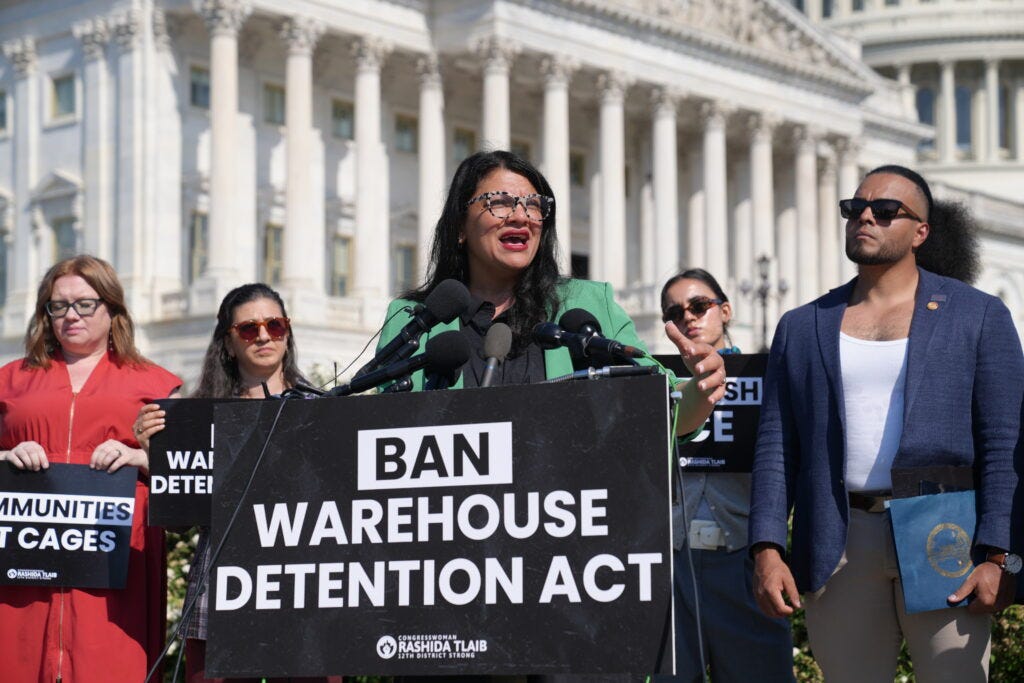
Remember all of the speeches about violent crime and the “worst of the worst”?
Of the people held in this expanding cruel, abusive, and unlawful detention system, nearly three-fourths have no criminal record whatsoever.

The administration is also defying congressional oversight. ICE has denied members of Congress legally guaranteed access to inspect facilities, despite federal law explicitly granting them that right with no prior notice required.
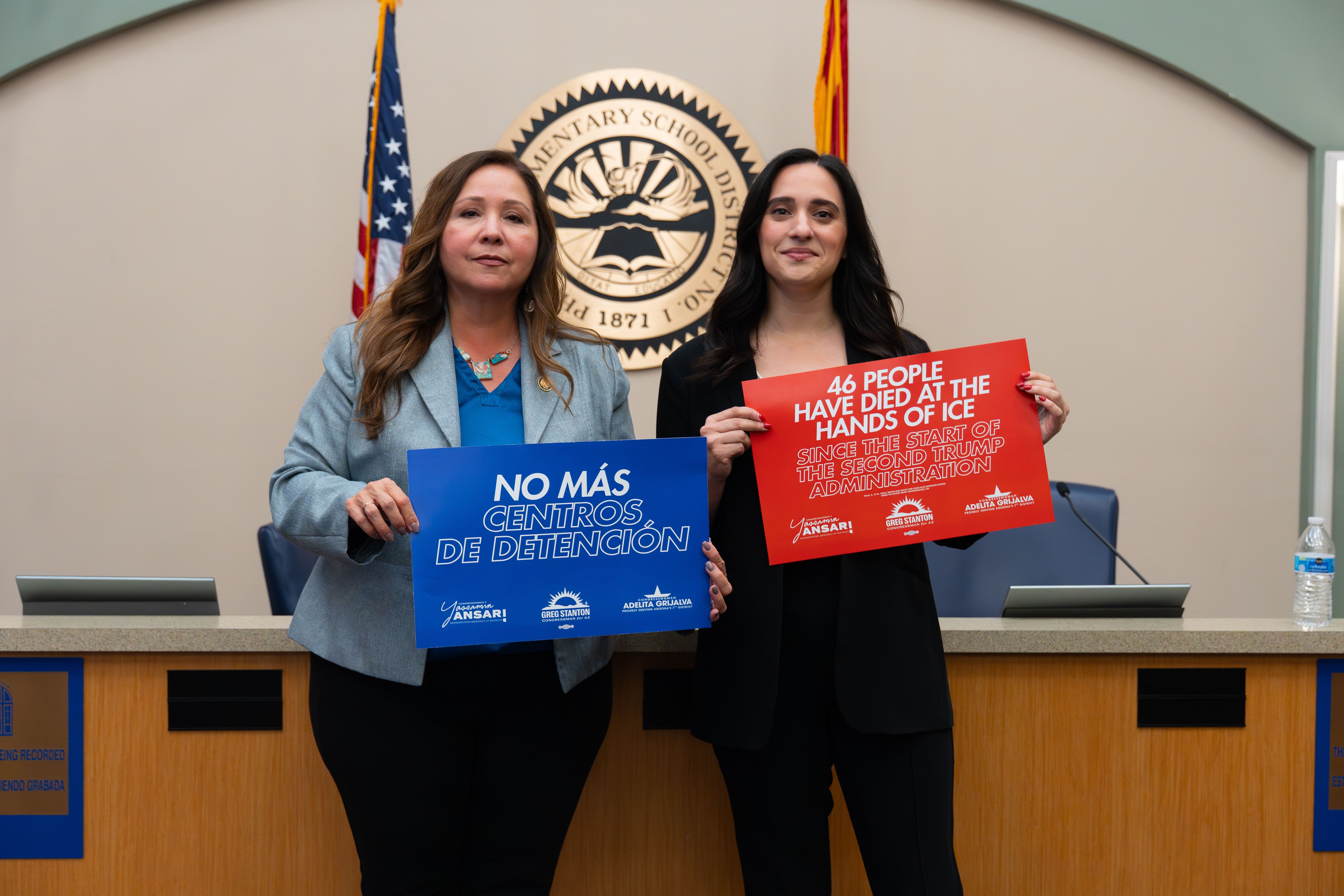
ICE has also purchased six Boeing 737s for the first government-owned deportation fleet in the agency’s history. Until now, deportation flights were operated by contractors. The pivot to ownership reflects how permanent the administration intends this apparatus to be.
The private prison companies running 90 percent of the detention facilities are major Trump campaign donors who have hired former senior ICE officials. GEO Group and CoreCivic have received no-bid contracts under “compelling urgency” justifications. Their stock prices soared after Trump’s reelection.

This is the deportation-industrial complex. A $75 billion machine that “we the people” have funded, purpose-built to imprison immigrants in mega-warehouses, deport them via a government-owned fleet, enrich the private prison companies running the system, and put fees in the way of anyone trying to use the legal process. All while denying the public and Congress visibility into what is happening inside.
Two-thirds of Americans do not support this scale of cruelty. The administration is doing it anyway, paid for by cuts to Medicaid, SNAP, education, and climate.
America’s Debt Sentence
There is a slow-motion crisis underneath all of this that almost no one is talking about plainly.
The United States now carries over $38 trillion in federal debt, roughly equal to the entire U.S. economy. That is the highest debt-to-GDP ratio since 1946.
In fiscal 2025, the federal government spent $970 billion to $1 trillion on interest from this massive debt. That is more than we spent on national defense. More than we spent on Medicare. More than we spent on veterans, education, and transportation combined.
In 2025 interest payments on the growing national debt was more than we spent on veterans, education, and transportation combined.

Under Trump, just as in his first term, the debt is accelerating. The average interest rate on outstanding federal debt has more than doubled, from 1.556 percent in early 2022 to 3.352 percent now. The CBO projects interest payments will hit $1.8 trillion annually by 2035, growing 76 percent over the decade. Faster than any other category in the federal budget.
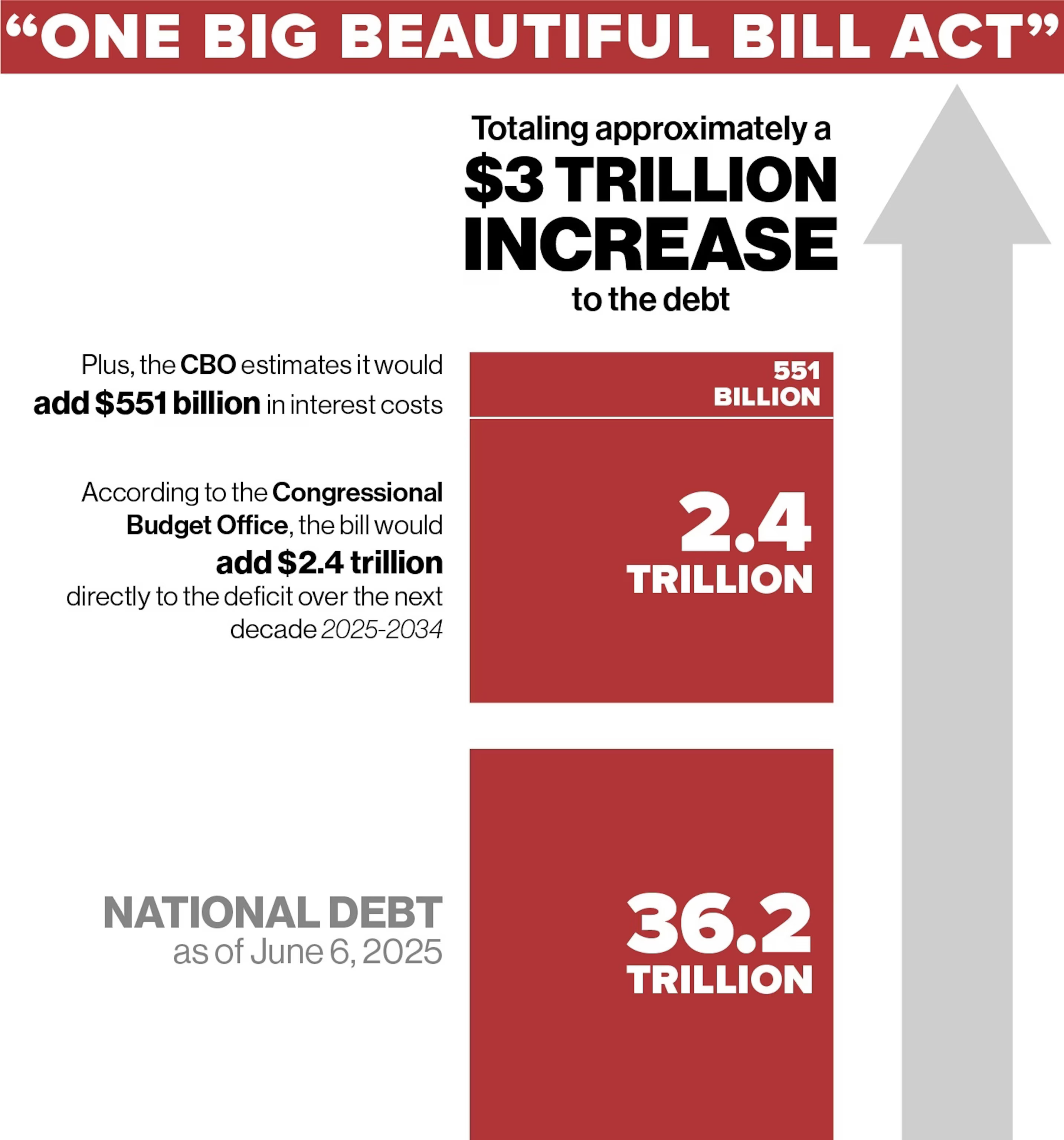
This matters because every dollar of the Trump/GOP tax cuts for their wealthy donors and corporations, combined with military spending add to a debt that is more expensive. Every new dollar borrowed costs more than the last one, because interest rates are higher. Every dollar of interest payment eliminates a dollar that could be spent on healthcare, education, climate, or anything else. The Big Beautiful Bill’s $4.1 trillion in new debt will cost real money in real interest payments for decades.
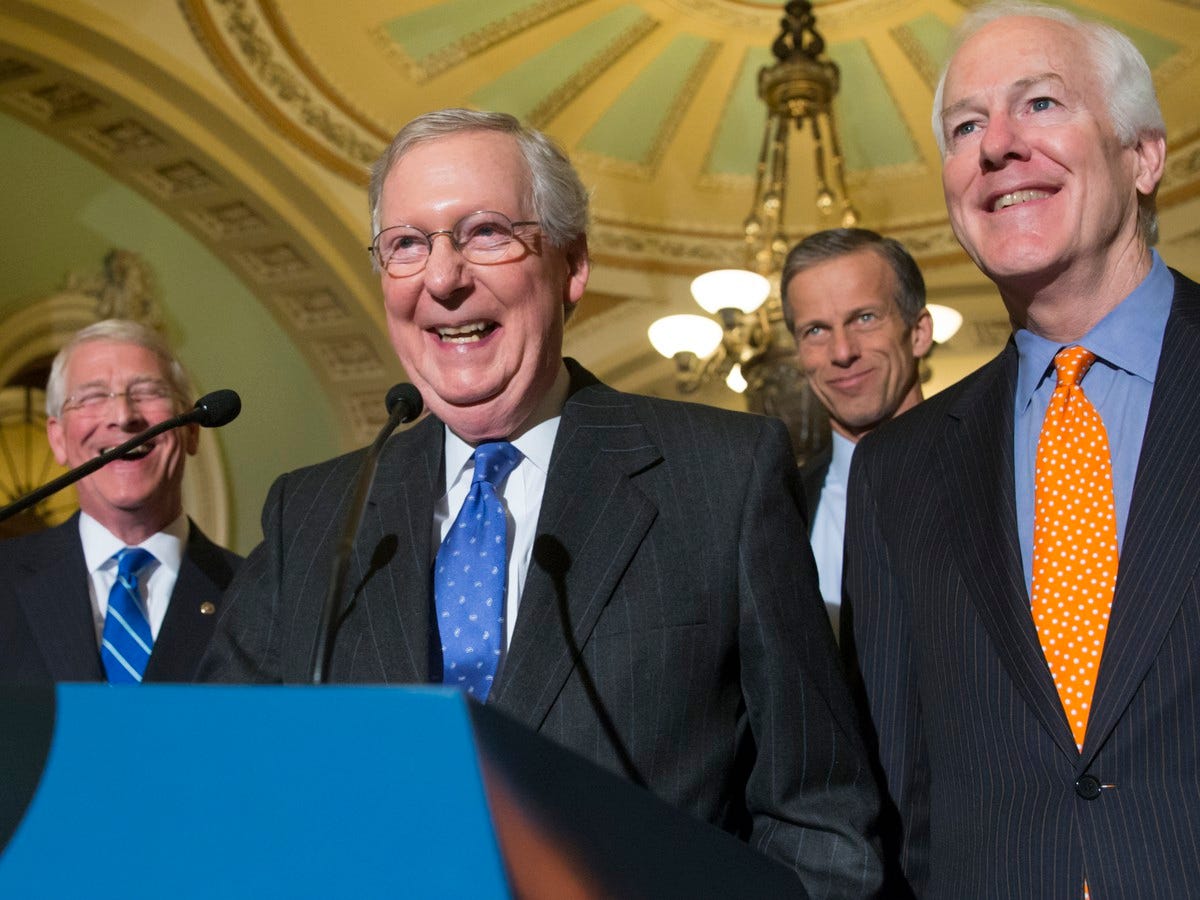
Republican leadership has spent forty years arguing that government spending is fiscally irresponsible while delivering tax cuts that exploded the deficit every single time. Reagan did it. Bush did it. Trump did it in his first term. Trump is doing it again, on a larger scale, with the meter running on debt service that will hit $1.8 trillion a year while we are still paying off the bill.

Voters still hold a misperception on the Republicans being the party of fiscal conservativism. The repeated GOP messaging about “Tax and Spend” Democrats has locked itself into the minds of voters despite the facts and evidence supplied by history. And budget deficits and massive debt are only an issue when there’s a Democratic President.
https://www.nationalpriorities.org/blog/2026/04/03/trumps-budget-has-endless-funds-war-not-much-help-americans/
The Abyss
Beneath both the budget question and the debt question is a third, larger question that almost no one in mainstream politics is engaging with seriously.
What happens to human labor when AI can do most of it?
The World Economic Forum’s Future of Jobs Report 2025 projects 92 million roles displaced by 2030. While the optimistic version of that same report claims new roles will emerge, the pragmatic version is that 41 percent of employers worldwide are planning workforce reductions in the next five years specifically where AI can automate the work. McKinsey estimates that today’s AI, the technology that already exists, could automate roughly 57 percent of current U.S. work hours.
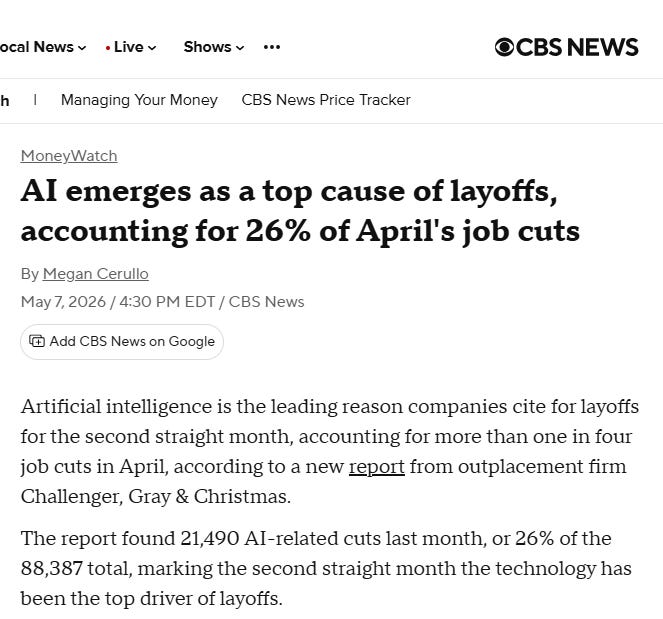
Real layoffs are already happening. AI-attributed job cuts in 2025 hit 55,000, twelve times higher than two years earlier. Amazon, Oracle Corporation, Salesforce, and other major technology firms conducted much larger rounds of layoffs while simultaneously accelerating AI deployment. But Block, Inc. (formerly Square) cut its workforce in half, from 10,000 to 6,000, with CEO Jack Dorsey explicitly stating that AI made the roles unnecessary. He predicted that within a year most companies would reach the same conclusion.
Brookings researchers studying this question in May 2025 concluded that retraining alone is not going to be enough. We may need, in their words, “to fundamentally rethink the role of work altogether.”
This is the conversation we should be having. What does the federal budget look like when ten percent, twenty percent, or more of working Americans are displaced from their current jobs within a decade? What does a healthy society do with the productivity gains and therefore, profits that AI delivers? Workers who have trained AI?
Currently all of the profit will be captured by investors and executives. As the system has been designed. Concentrated wealth. Concentrated power.
The Trump/Vance GOP budget has no plan for displaced workers.
Nothing for retraining at scale. Nothing for the care economy that could absorb displaced workers. Nothing for shorter work weeks. Nothing for a federal jobs guarantee. Nothing for universal basic income as the economy reshapes itself.
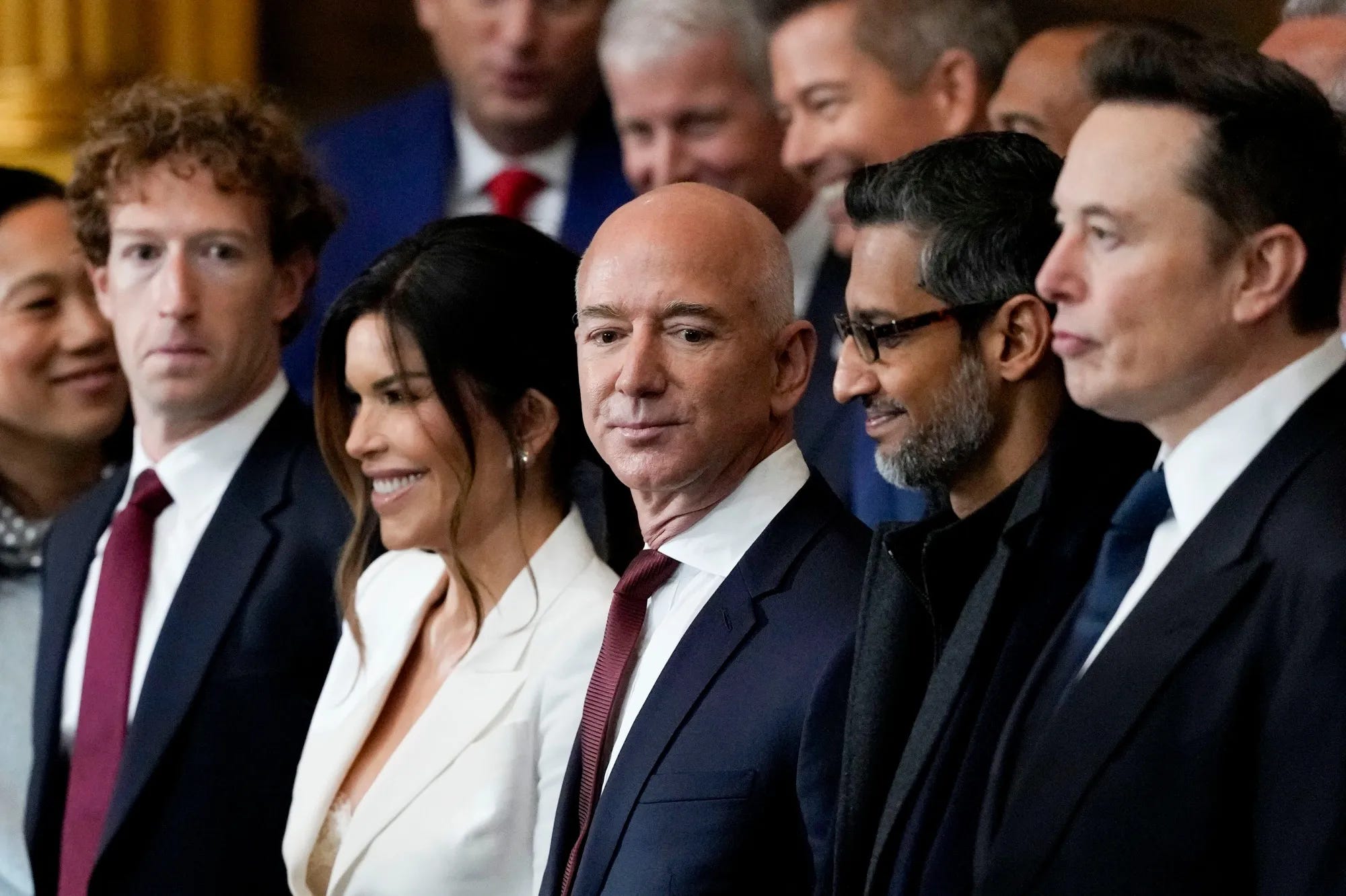
The wealthiest Americans who are enjoying the tax cuts, are also the ones who own the platforms reshaping the labor market. Meta, Google, Amazon, the venture capital that funds AI startups, the cloud infrastructure that runs them. They get the productivity gains. They get the tax cuts. They get the inaugural invitations. The displaced workers get to apply for whatever cuts of Medicaid and SNAP survive the bill.
This is not sustainable. Politically, economically, or morally.
A People’s Budget
The same dollars going into Pentagon arms-up and tax cuts for billionaires could pay for things this country actually needs. Not in a hypothetical “wouldn’t it be nice” way. In a real world manner that leading economists across the political spectrum have already forecast.

Healthcare
Yale researchers found that Medicare for All would save 68,000 American lives a year while reducing total national healthcare spending by 13 percent. About $450 billion in savings every single year. The University of Massachusetts Amherst estimates $5.1 trillion in savings over a decade. Even the Koch-funded Mercatus Center, which had every reason to oppose the policy, found $2 trillion in savings. Universal coverage is not more expensive than what we have. It is cheaper because it eliminates the insurers who profit by delaying and denying claims and the massive profits reaped by Big Pharma.
Housing and Affordability Relief
Reversing the Trump/GOP slashing of domestic programs addressing housing and affordability. Then add investment in low-income housing, community development, and energy assistance. The combined cost of every domestic cut he made this year does not reach the price tag of the Epstein/Trump Ballroom.
Education
Education is being sacrificed in plain sight. Federal funding that goes specifically to schools serving low-income students is being cut. Research grants are being slashed. Public colleges and universities are becoming less affordable while student debt continues to crush millions of Americans. And yet economists have estimated that tuition-free public community college and four-year college nationwide would cost roughly $80 billion per year. About five percent of the proposed military increase. Five percent to open the doors of education to an entire generation, while trillions flow instead into war, detention, and militarization.
Climate
Climate collapse is treated as a footnote while militarization becomes national doctrine. Trump’s bill repeals most of the already modest Inflation Reduction Act, dismantling one of the few large-scale federal investments in clean energy and climate resilience. The entire ten-year climate commitment under the IRA totaled roughly $369 billion. One single year of the proposed military budget is more than four times larger. We are spending vastly more preparing for conflict, instability, and destruction than preventing the planetary crisis already driving them.
Diplomacy, Global Commitments, and USAID
Diplomacy. Restore USAID and modernize it. The full budget was $63 billion a year and saved 90 million lives. Compare that to $200 billion spent on three months of war with Iran.
Public Media
Independent media. Local journalism is collapsing. Communities lose newspapers, accountability dies with them. A modest investment, low single-digit billions per year, could rebuild local newsroom capacity. Less than one percent of the ballroom project.
AI-driven Economic Transformation
A real economic transition for the AI era. Shorter work weeks. A federal jobs guarantee for care work, climate restoration, and infrastructure. Direct support for displaced workers. A windfall tax on AI productivity gains that flow to the platform owners. Public investment in worker-owned alternatives. Universal basic services to provide a floor as the labor market reshapes.
Public Infrastructure
Infrastructure that actually serves people. Affordable broadband, maintained roads, functional public transit, a power grid that does not fail every summer, water systems that do not poison children. The engineering exists. The dollar figures are known.
The contrast is not subtle. One budget invests in Pentagon contractors, billionaire tax cuts, and presidential vanity. The other invests in health, education, climate, diplomacy, and the foundations of an economy that works for the people who live in it.
The Future is Unwritten
The current vision is clear: extract from working people, redirect to billionaires and military contractors, build monuments to Trump. When working people object, ignore them. When the courts object, attack the courts and pack them with loyalists. When the next election threatens, suppress voters and gerrymander the maps. When the global order requires diplomacy, send cruise missiles instead.
A different vision is possible. Leadership focused on strengthening democracy, education, independent news, climate, diplomacy, and immigration reform would write a completely different budget. A budget that:
Provides healthcare to every person in this country, with no premium and no copay
Funds depoliticized K-12 schools and free public college as the foundation of an informed citizenry
Treats climate as the existential infrastructure investment of the next decade and not a divisive hoax
Restores American diplomacy and humanitarian assistance as cheaper, more effective alternatives to permanent war and conflict
Invests in independent local journalism and public media because any meaningful democracy requires an informed society
Reforms immigration to match labor demand, family reunification, and humanitarian commitment
Ends partisan gerrymandering by funding fair maps initiatives and passing voting rights protection with teeth
Holds all people who actively supported, planned, and/or worked to overturn the 2020 election accountable, including Supreme Court justices like Clarence Thomas and Samuel Alito who refuse to recuse themselves on cases tied to their families and households, and Chief Justice John Roberts who has presided over the systematic dismantling of voting rights and presidential accountability
Rebuilds the federal judicial nominations process so judges are nominated through an independent, non-partisan law society rather than handed seats as political favors
Addresses the AI-driven labor displacement that almost no one in mainstream politics is engaging with seriously, before it produces social and economic crisis

The Roberts Court ruled that only some of “We the People” get to choose. We need to show up in unprecedented numbers to restore our aspirations of democracy, equality, and justice for all.
The current choices, the war, the ballroom, the corruption, the gerrymandered districts, an ethically bent justice system, the abandonment of the global humanitarian system, and the endless manipulation, selective outrage, and the continuing obstruction of the Epstein/Trump/Maxwell files, are being made by a small wealthy minority who count on the rest of us being too tired, too distracted, or too cynical to push back.

The future is unwritten. That is not a slogan. It is a fact about budgets and the values they express. Right now, the people writing the budget are writing one future. Together we must write a different future.
Our political choices matter. Our national budget matters. Leadership Matters.
PS -My Articles and Subscriptions are always free.
If you find this article of value, please do share with friends, associates, & others who have an interest in the content.
Please note that my articles and subscriptions are not paywalled. This stems from a guiding principle -that any meaningful democracy requires an informed, educated, and engaged society. It is also to honor the life of Aaron Swartz.
Aaron held firmly to the belief that research and knowledge intended for the betterment of humanity should be freely shared.
If the problem is extraction, then the response must be construction.
I am building Civic Works and its core platform, civ.works, as a direct alternative to the systems that have captured our data, our attention, and our civic life. This is a 501(c)(3) effort to create infrastructure that serves the public, not exploits it.
The goal is simple and necessary. A subscriber-supported, ad-free civic network where people can access trusted information, engage constructively, and take meaningful action without being tracked, manipulated, or sold.
No ads. No data harvesting. No hidden incentives.
Just people, information, and the tools to participate in a functioning democracy.
This kind of infrastructure will not be built by the same forces that benefit from the current system. It has to be built by us.
That is why we are asking for direct public support.
If this work resonates with you, I am asking you to make a simple commitment. Visit the pledge page and commit to supporting civ.works at launch. A small monthly contribution, combined across thousands of people, creates the independence required to build this platform without compromise.
https://civ.works/pledge/pledge.html
This is not just about funding a project. It is about proving that a different model is possible. One where civic infrastructure is accountable to the people who use it, not the interests that seek to exploit it.
If you believe the current system is failing, this is one way to begin rebuilding it.
And if you cannot contribute financially, sharing this effort with others is just as important.
The system we have was built deliberately.
What comes next can be built the same way.
Aside from writing, mentoring others, and projects related to democracy, economics, and social innovation, I’m dedicated to Civic Works, a 501c3 non-profit organization building and managing technology that blends social networking and civic engagement. Our core effort is around civ.works. When complete, it will be a subscriber-supported, ad-free social network that does not betray subscriber trust by selling or sharing data with marketers or sinister political operatives.
I’m incredibly grateful for all who contribute to the civ.works effort through our secure payment processor, Stripe, and all who help us gain visibility by sharing the project with journalists and others to move the effort forward.
Special appreciation for all who continue to recommend my rants and musings, restack articles that are found to be worthy, and share with friends and family. And the following are some special recommendations for stacks I value -
Liz Oyer, Former DOJ Pardon Attorney
It is time to repair the destruction caused by the Republican bulldozers.